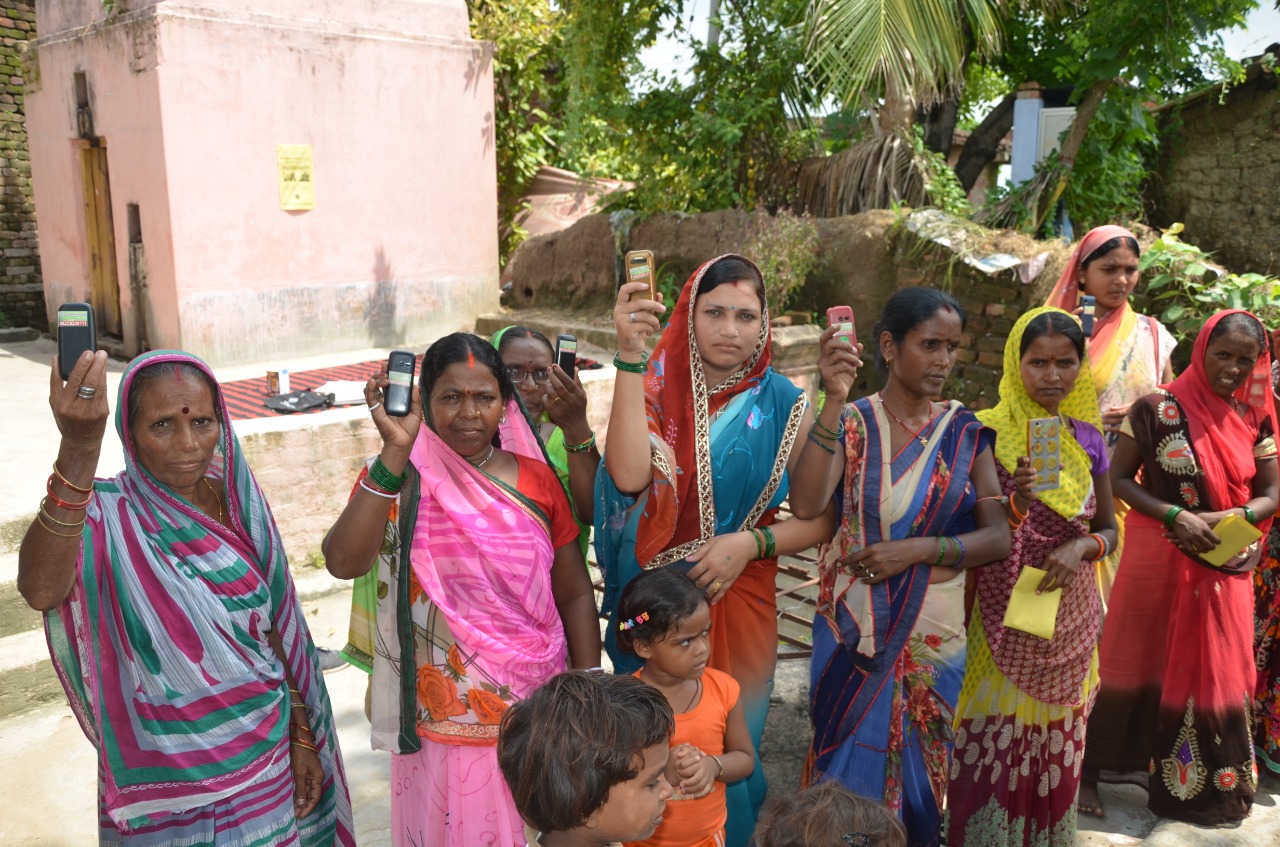


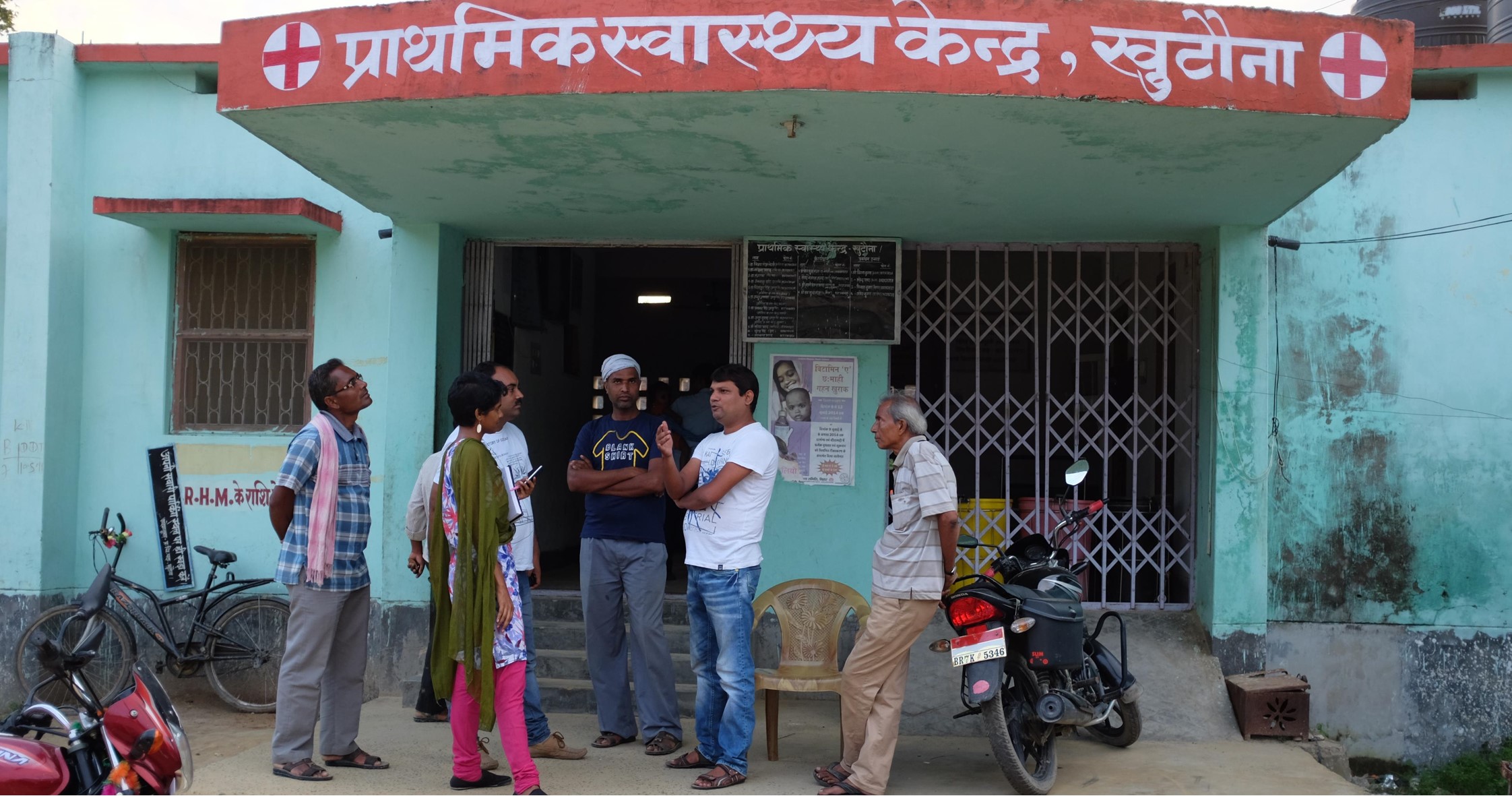
We believe that a participatory media platform is efficient only when it is entrenched in the local community, when it can be leveraged for collective action to strengthen the state’s accountability. Gram Vaani’s participatory media platforms play a powerful role in putting pressure on authorities to act on grievances that people face when accessing their rights to schemes and welfare benefits offered by the state. Over the years, local inefficiencies on a range of topics have been resolved after they were reported on Mobile Vaani.
Our work on grievance redressal picked up pace during the COVID-19 pandemic – during and after the lockdown – and we helped resolve issues of over 800 people who were stuck without food, migrants looking to go back to their homes, unable to procure ration or register their demand for NREGA jobs, or access other welfare offered by the central and state governments, and more.
Why grievance redressal is a part of our participatory media work: Many social welfare schemes in India suffer from implement problems, putting them out of reach of the very people they are meant to help. People with low literacy levels often don’t have information on schemes and their eligibility criteria, how to apply and where to go if they face issues in application or accessing the benefits as an enrolled beneficiary. Grievance redressal mechanisms set up by the government are complicated to navigate, slow and often inefficient. For instance, people may not know how to navigate a government helpline, or know which document to refer to, to get a number that one needs to enter in the helpline. Many also feel intimidated to speak to a government official to convey a grievance.
Gram Vaani’s participatory media platforms seek to equip our users with information and contribute to their agency to make positive changes in their lives. Providing information helps people understand their entitlements and demand accountability from the state to resolve their grievances.
Why does IVR work in grievance redressal? An IVR serves two purposes in grievance redressal: first, it is an easily accessible technology to help people register a grievance; second, its ease of use means items recorded by a person and ‘published’ on the platform can be easily heard by, and forwarded to, others – including fellow community members, local media, authorities and service providers, building pressure on the local stakeholders to address the particular issue.
Going beyond just technology: Technology alone isn’t sufficient in grievance redressal, as people have repeatedly emphasised the importance of a person whom they can trust, and who understands their contextual issue. The presence of volunteers, drawn from the community itself, encourages people to confidently air their grievances on the platform and feel understood. The volunteers, on the other hand, are equipped with eligibility and access-related information for a range of schemes, trained by Gram Vaani to access government grievance redressal mechanisms, and build networks with local administrators. This training helps them understand and use a rigorous pathway to resolve issues and drive impact in grievance redressal. For instance, when a volunteer comes across an agriculture-related grievance from a user, they take it first to the relevant Block Officer, and if still not resolved, escalate the grievance to the District Officer, and then on to the Deputy Commissioner.
The grievances we’ve heard on our platforms: In over 10 years of Mobile Vaani and a range of participatory media platforms, here are the kinds of grievances that users have shared on the platform:
- Food: Not enrolled in the Public Distribution System (PDS) or not getting ration from the local PDS dealer because of authentication issues, corruption, etc.
- NREGA: Not able to apply for job cards or demand work; not getting work despite applying for it; not getting paid for work done due to a range of issues
- Infrastructure: Poor/damaged roads, lack of electricity, streetlights, public handpumps, etc.
- Welfare schemes: Issues in applying for or receiving benefits of disability or widow pensions, elderly pensions, PM KISAN, Ujjwala, etc.
- Access: Difficulties in accessing local medical services due to unavailability of staff or services, in using banking services because of issues at Customer Service Points or non-functional ATMs, etc.
Especially during the COVID-19 pandemic, our platforms were leveraged by citizens and civil society alike to raise and address grievances. For instance, people in rural areas who had developed COVID-19 symptoms but couldn’t get test done despite trying to reach government health centres, were assisted by our NGO partners – with Gram Vaani platforms being the medium in which the people recorded their grievance, which was then forwarded to our NGO partners.
Outcomes we have contributed to: Gram Vaani platforms have helped address hundreds of grievances, ranging from the release of six months’ pending wages to school teachers, to dispatch of fumigation equipment against malaria after a series of deaths in a village, to having fines imposed on officials who were taking bribes for beneficiary enrolment, to pointing out illegal use of machinery in NREGA works, and highlighting stone smuggling to police officials which eventually led to a crackdown on these activities.
Volunteers use their knowledge of administrative workings and local contacts to drive accountability when grievances are recorded:
“… We applied for a crop failure subsidy with the Block Development Officer (BDO) previously, but he refused to accept our application without stating any reason… Mobile Vaani volunteers then helped us get the subsidy released when they interviewed the Block Development Officer for their weekly Janta Darbar program pushing for greater accountability and the course of action for current week’s issues and reports on the status of previous week’s grievances…”
– A farmer from Jamui, Bihar
Volunteers, being an integral part of the community, also raise issues on behalf of the community and initiate action.
Here’s another example of volunteer-led action:
“A few weeks back I recorded a message on JMV about a school headmaster harassing the students by charging Rs10 per student for issuing the admit card. When a few students refused to pay, the headmaster threatened to fail them in the practical exams. After my message was published on JMV, it spread like wildfire. Everybody got to know about the tactics of the headmaster. So the headmaster called a meeting of the parents and owned up to his mistake. He promised not to repeat such a mistake in the future and also appealed to the students to write their exams without worrying about all this.”
– A volunteer, Jharkhand
In 2020, our volunteers and teams acted collectively to get NREGA working for its intended beneficiaries – people who were out of work during and after the COVID-19 induced lockdowns in India. Due to absent Rozgar Sewaks, who are government officials whose responsibility it is to help people apply for and get NREGA work, we found that many people who wanted to take up NREGA work were unable to fill forms to get job cards or register their demand for work. Here is how Archana, a college student and volunteer with Jawahar Jyoti Baal Vikas Kendra in Samastipur, Bihar, and a regular listener of Mobile Vaani, decided to use the platform to understand the issues people faced while applying for work under NREGA.
Upon listening to people’s grievances around applying for job cards or registering demand for NREGA work, Archana decided to take it up with the local administration. Using Mobile Vaani’s forwarding feature, she shared these grievances directly with NREGA officials such as the Rozgar Sewak and the block programme officer. Shortly, the Rozgar Sewak announced that the Rozgar Diwas (a weekly day to help people apply for job cards, register demand for NREGA, etc.) will be held every Wednesday at the panchayat office. Archana ensured that the Rozgar Diwas was held regularly.
Archana also learnt the process of applying for job cards through Mobile Vaani and helped 40 people apply for cards with the assistance of the Rozgar Sewak. All along, Archana shared updates on the process, interviewed the local officials and their statements about the programme, to ensure accountability to their statements later.
Read Archana’s story (in Hindi) here.
The volunteers are also able to spur collective action by informing people of their rights and entitlements, and encouraging them to raise their voices when they are denied these. In the case of NREGA, we delivered letters to the panchayat representatives in nearly 300 panchayats, urging them to organize a Rozgar Diwas regularly, publicize it among the people, and ensure that anybody who needs work is able to get work. Additionally, in 20 panchayats we have helped institutionalize a Rozgar Diwas each Wednesday through which so far over 400 people have gotten job cards and been able to register their work demand.
Wherever people were unable to come to the Rozgar Diwas, we collected and submitted their details to the panchayat. We are also closely tracking the time it takes for them to get work, get paid, and the payment modalities, so that we can advocate for a smoother process in the future. Read our detailed report on the NREGA work here.
During the COVID-19 pandemic, our platforms were actively resolving people’s issues accessing food, transportation (especially migrant workers stranded in other cities), health services and more.
“I am a waste collector in Bahadurgarh. A few days ago, I shared on Mobile Vaani that I’ve been hungry for several days and haven’t been able to get any food to feed others in my family. The Mobile Vaani team helped me with provisions such as 5 kilos of rice, atta, fuel, and more. I thank them for the help.”
Vinod Sah from Bahadurgarh, Haryana
In March 2020, frontline health workers (FLWs) of the Katkamasandi block in Hazaribagh district, Jharkhand, raised the issue of not having enough Personal protection Equipment (PPE) such as mask, gloves and sanitiser. The Medical Officer in charge of the Community Health Centre (CHC) confirmed that they had received some equipment but this would not be sufficient for all the workers. Hence, they sent a letter to the district administration with their requirements.
Hazaribagh Mobile Vaani aired this issue on 30 March.
On 15 April, Mobile Vaani volunteer Ravindra Kumar mentioned that this story was taken to district authorities who took action and sent additional PPEs to the CHC.
While volunteers support citizens in addressing grievances reported on Gram Vaani’s participatory platforms, the grievances are recorded on a public platform – where they can be heard by others – rather than as an individual complaint on a hotline or a government department. This public exposure seems to improve the success rate by making the authorities more accountable. On many occasions, government officials listen to a grievance broadcast on our platforms and take action even without the intervention of a volunteer:
“… the volunteers decided to highlight the inconsistencies in the mid-day meal scheme in their district… meals weren’t being provided to the students as per the norms or were stopped entirely. A short message informing people of their children’s entitlements and current irregularities was created and aired on the club. People were asked to press number 9 if they had witnessed these irregularities and wanted authorities to act on them. We received close to 2000 pledges and used this count to write a letter to the District Education Officer (DEO). The DEO wrote back that he had constituted an investigation team. He further invited the volunteers to monitor the scheme, who now do this at the school level…”
– An example shared by a Community Manager in Bihar
Many labourers of the Pasai Dalit community in a village in Hazaribagh, Jharkhand, who were not enrolled in PDS, were stuck without provisions after the COVID-19 lockdown. As soon as the issue was broadcast on Mobile Vaani, the mukhiya arranged for food grains for them and also announced that others who did not have ration cards could also contact her for assistance.
Strengthening agency of our users: Technology is a tool to facilitate development and is not an end in itself – it needs to be adopted by people to use in their agendas for change. Our volunteers have, in many cases, adopted the platforms as their own – leveraging their own strong connect with the community to understand its challenges, they use the platform to educate users on their rights and encourage them to record their grievances, and even train themselves to escalate the grievances to various levels, be it with local media or administration. An area of impact we have seen over the years, both among users and volunteers at Gram Vaani, is that listening to others from their own community bring up grievances encourages them to also believe they have the right to demand accountability from the state. This contributes to building their agency, spurring them on to be their own change agents.